CCTV & Cameras
According to mid-year police statistics, theft-related offences, including shoplifting and theft in homes and offices, climbed over 25 per cent in the first half of 2023 compared to 2022. Experts suggest that the contributing factors range from more brazen offenders who are taking advantage of self-checkout counters to opportunistic crimes by tenants or even family members.
Regardless of the cause, the uptrend highlights the need for comprehensive CCTV monitoring to secure Singapore workspaces. However, you may get swamped by the factors you need to weigh on when purchasing and installing CCTVs. This guide will simplify the process for you. We will discuss everything you need to know about CCTV surveillance for offices.
Understanding the Importance of CCTV in Offices
CCTV cameras are the silent guardians of modern spaces. They provide 24/7 surveillance solutions to companies that are worried about security and work quality.
Catch Criminals Red-Handed
The high-resolution footage from CCTV systems provides crystal clear evidence to identify thieves, trespassers, and vandals if a security breach occurs. CCTV security cameras also cover inventory storage areas for goods movement monitoring. Their non-stop monitoring acts as a strong deterrent against unwanted entries as well.
Encourage Productivity, Dissuade Slacking Off
Employees tend to be more compliant and accountable when they know their activities are being recorded on camera. They avoid slacking off, wandering into restricted areas, and lazing around when they are being watched.
Business owners can also monitor late working staff via live CCTV footage and take immediate action during dangerous situations.
Provide Peace of Mind 24/7
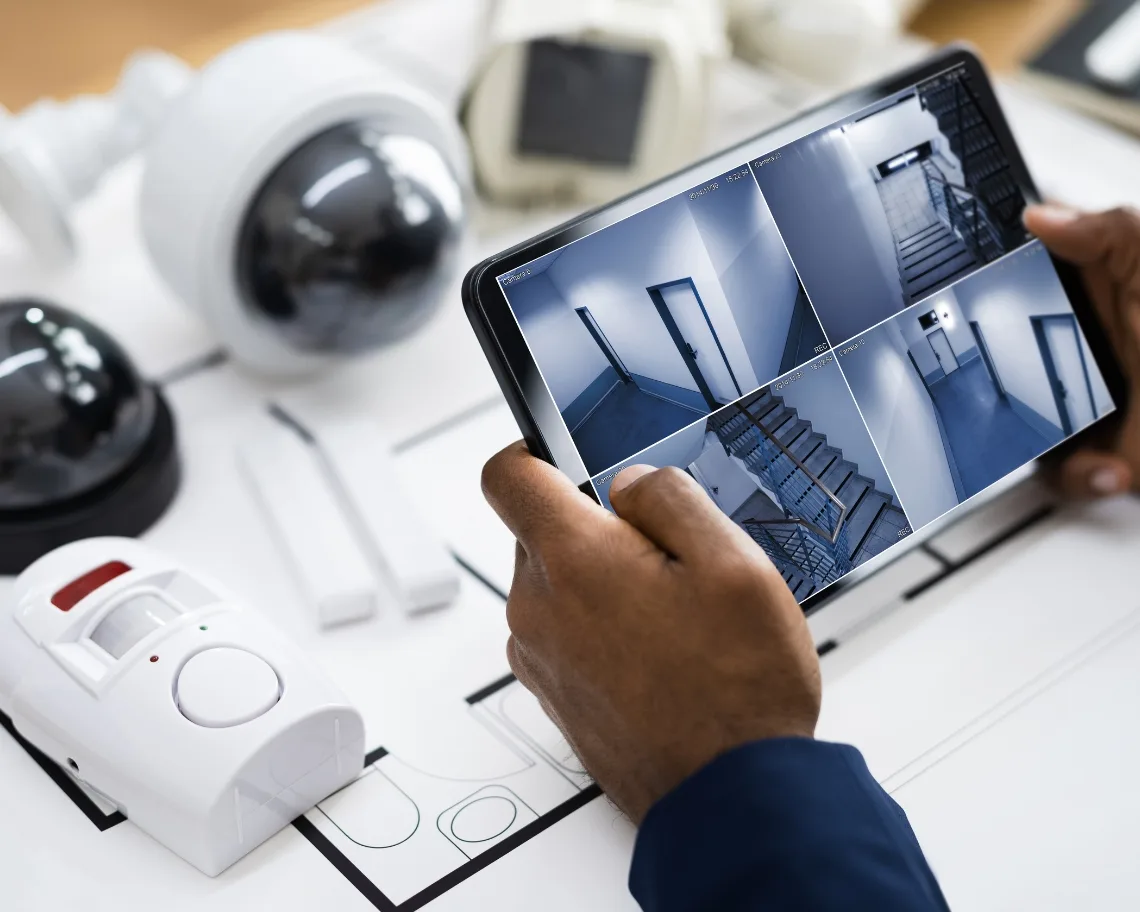
Both property and lives are at stake when unexpected incidents happen. CCTV camera systems allow business owners to remotely monitor offices 24/7 through live footage access from their mobile phones.
It significantly benefits them because they can take prompt measures, such as alerting first responders during a break-in, fire, accident, or any other unforeseen event.
Discourage Workplace Harassment
Sensitive workspace areas are also covered under CCTV camera systems. They deter actions involving sexual harassment or assault against vulnerable employees. Victims also find it easier to prove accusations if such regrettable incidents do occur with video evidence.
Types of CCTV Security Cameras Suitable for Office Spaces
With the rapid advancements in CCTV technology, a wide gamut of camera types are available today to meet the diverse needs of offices. These cameras come equipped with specialised features.
Let’s take a look at some of the most common options suitable for securing office environments.
Dome Cameras
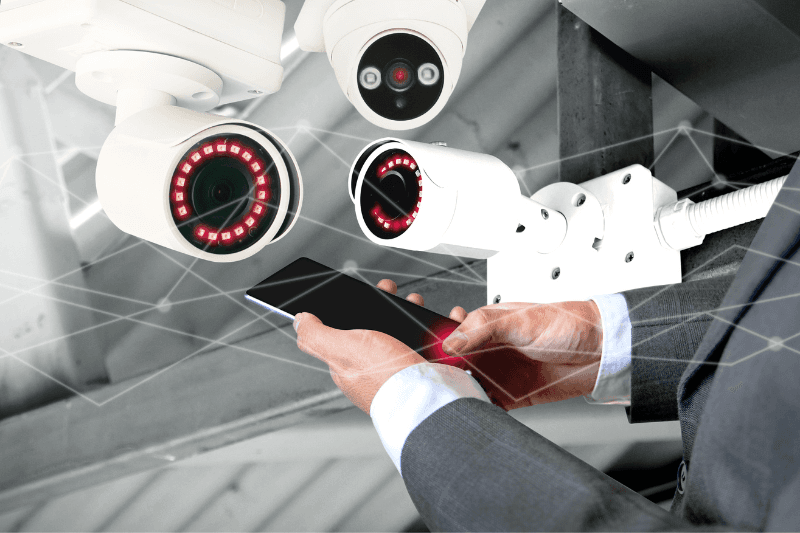
Dome CCTV cameras are round cameras usually mounted on ceilings. The key features that make them well-suited for offices include:
Resolution: Dome cameras come in a wide range of resolutions, from 1080p HD to 4K, ensuring sharp and clear footage. Higher resolutions are better for larger office spaces.
Day/Night Vision: Most feature infrared night vision. They enable clear video when the office is dark. Select models with at least 30-metre night vision.
Connectivity: Dome cameras can record to onsite DVRs or connect wirelessly to transmit footage to a central system.
Storage: Footage can be saved to cloud servers or local hard drives for later retrieval if needed. Choose enough onboard or external storage for your needs.
Bullet Cameras
Bullet CCTV cameras feature cylindrical bodies and are designed for mounting on walls or ceilings. The features that make them useful for offices are:
Powerful Zoom Lens Capabilities: Bullet cams allow you to zoom in on specific areas in large open office spaces up to 50m or more away. Excellent for monitoring from a central location.
Weatherproof: Bullet camera housings are outdoor-rated, meaning you can install them inside and outdoors in the office.
Infrared Night Vision: Like dome cameras, bullets capture crisp footage through infrared tech when the lights are off.
PTZ Cameras
PTZ (pan-tilt-zoom) cameras allow for sweeping 360-degree field of views of office areas. Their key capabilities include the following:
Pan/Tilt/Zoom: Remotely control the camera view to follow activity in a large area. Create predefined pan, tilt, and zoom settings so you can quickly switch between important views with a single click.
Wired/Wireless Connectivity: PTZ cameras can connect to NVRs via cabling or transmit wirelessly in hard-to-run cable installations.
High Resolution with Superior Night Vision: Capture vital details with 4K sensors. Advanced low-light performance through infrared night vision exceeds 130 ft.
Considerations for Choosing CCTV Cameras in Singapore
Installing a CCTV camera system comes with important legal, regulatory, and technical considerations unique to Singapore. As you evaluate security camera solutions for your office, be sure to factor in the following.
Legal & Privacy Regulations
Singapore takes privacy laws regarding surveillance equipment seriously. Make sure your CCTV deployment adheres to the guidelines from the Singapore Personal Data Protection Commission (PDPC). The requirements are:
Display clear and visible signage informing people that camera recording is in progress. Signs should be positioned at eye level upon entering monitored areas.
Avoid capturing footage of nearby private residences or other non-office spaces. Seek legal advice if the cameras could closely monitor private areas.
Set specific data retention periods to delete recorded footage automatically after a defined duration. Videos that are not needed for legal or business reasons should be deleted within 30 days by default.
Cameras should be password-protected to allow access by designated employees only. Public remote access or open WiFi connectivity should be disabled.
CCTV Camera Brands in Singapore To Consider
There are a variety of reputable CCTV camera makers with offerings that are a “match made in heaven” for business needs. Below are some providers that you can consider.
Axis Communications
As a pioneer in network video, Axis cameras deliver high reliability, quality, and innovative capabilities. Its key features include:
Top-tier image quality and resolution choices from 1080p to 4K and higher
Diverse durable form factors: domes, bullets, modular, panoramic, thermal, and more
Optimised designs for challenging environments like outdoors, vehicles, and hazardous areas
ACTi
ACTi provides complete IP-based surveillance ecosystems integrating cameras, NVRs, hybrid DVRs, apps and video management software (VMS). Signature features consist of:
Up to 5MP super high-definition camera resolutions
Tight integration options with access control and intrusion detection systems
Optimised VMS and mobile apps for local and remote video monitoring
Dahua Technology
A leading international brand offering high-performance CCTV equipment with next-gen functionality:
Innovative Ultra HD 5MP analytics cameras with smart detection features
Advanced encoding algorithms to minimise bandwidth and storage needs
Cross-platform viewing with gDMSS mobile app and XMEYE service
i-PRO
Focused on high-value security, medical/industrial imaging niches where performance matters most: Cutting-edge 4K and 4-sensor imaging modules and multi-AI cameras.
Cutting-edge 4K and 4-sensor imaging modules and multi-AI cameras
Proprietary advanced technologies like i-PRO EXTREME and FacePRO
Mission-critical reliability backing critical infrastructure and life safety apps
Installation and Maintenance Tips
Ensure high-quality video capture and system longevity of your CCTV in Singapore through proper installation and maintenance. Here are the guidelines you can follow to guarantee a longstanding office CCTV surveillance system:
Site Survey
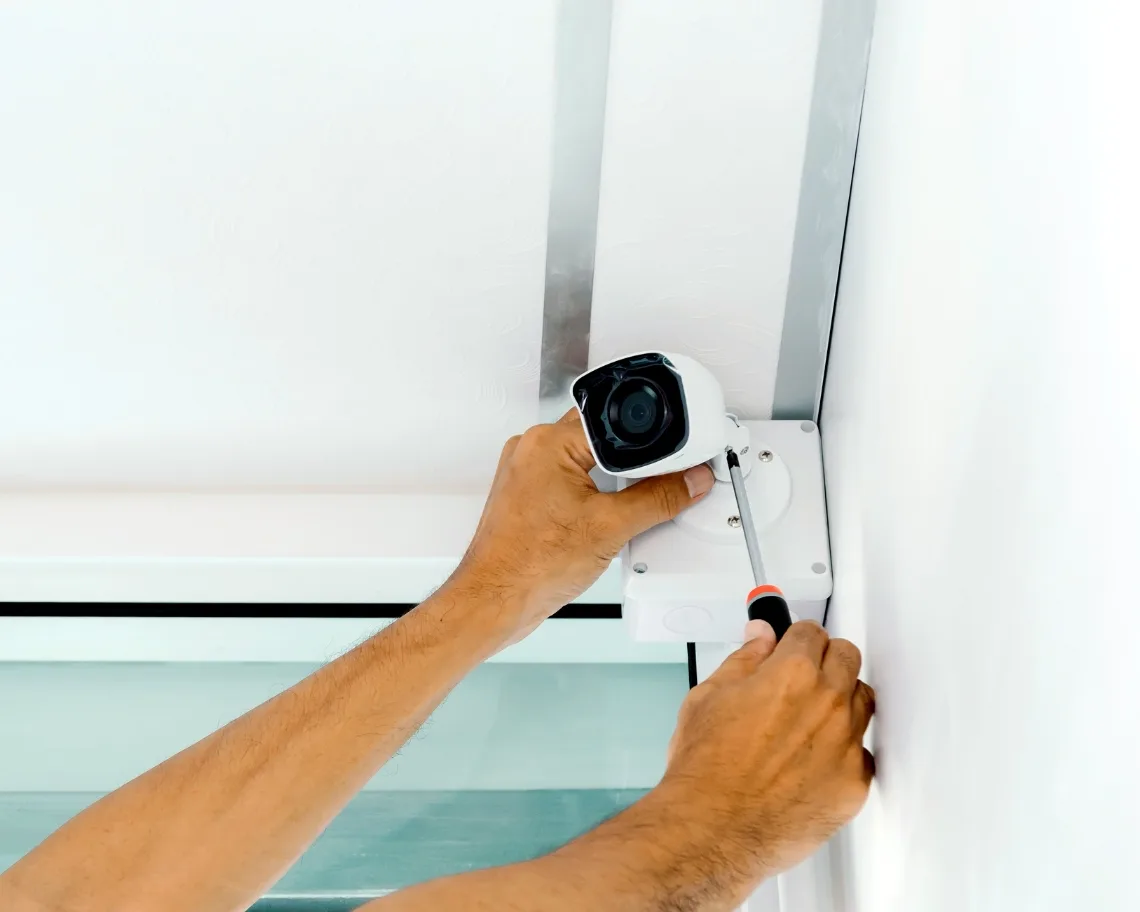
A comprehensive CCTV camera system site survey should precede the installation to map out optimal camera placements, cabling paths, lighting needs, and more. An expert provider like D-Ron will evaluate site layout, dimensions, WiFi coverage, and other factors to create a customised surveillance blueprint that caters to your specific premises and usage requirements.
Professional Installation
DIY camera kit installation may seem quick and affordable at first glance, but the risks of subpar video capture, equipment damage, or early failure are not worth the upfront savings.
Leverage experienced technicians to handle the complete CCTV implementation process to avoid guesswork. They are the ones who can provide essential knowledge transfer regarding proper camera and cabling positioning for ideal coverage with minimal blind spots and glare issues.
Scheduled System Health Checks
Preventative maintenance is central to the ongoing integrity of the CCTV system. Schedule period comprehensive checkups every 6 to 12 months so you can spot potential faults and nip them in the bud.
The technicians will scan all components for signs of deterioration and confirm that cameras remain properly calibrated for motion detection, image quality, and night vision performance.
Consider signing a maintenance contract or service-level agreement guaranteeing regular system audits and access to discounted repairs.
Cost Considerations and Budgeting
Installing a well-rounded CCTCV surveillance system also requires strategic budgeting with an eye towards maximising value. Keep the following expense factors in mind:
Camera Expenditures
The cameras themselves often represent the largest upfront investment, so choose wisely. The important variables influencing CCTV camera pricing include:
Resolution
Sensor technology
Lens quality
Durability rating
Integrated analytics capabilities
Generally, higher-resolution units with premium features cost more. Consider both your present needs and realistic future requirements when specifying cameras to balance performance with affordability.
Installation Fees
Rather than concentrate on the exact dollar figures, it’s better to have transparency upfront on what deliverables professional CCTV installation entails. Usually, fees cover all on-site cabling, camera mounting, network or signal testing, initial configuration, and other construction services tying everything together into a working, high-quality system. Ongoing service contracts may bundle together longer term maintenance, monitoring fees, and future upgrade options as well.
Discuss the full range of service plans, including the costs, with a trusted provider to discover the best fit.
Recurring Operating Costs
Aside from regular maintenance, operating an office CCTV system also incurs ongoing bandwidth subscription fees for cloud-connected cameras, electricity costs, and possibly CCTV-as-a-service subscription plan payments for hosted storage and monitoring.
Calculate the total cost of ownership (TCO) covering a 5-year projected lifespan to have the most insightful project of the real-world expenses.
Integration with Other Security Systems
CCTV surveillance can be complemented with interconnected access control, intrusion detection, and other systems. Integrated setups deliver advantages like:
Video Verification of Alarms - CCTV security cameras can automatically cue corresponding footage upon access control or alarm triggers.
Unified Management - Consolidating multiple building systems within a central video management platform standardises control, monitoring visualisations, user permissions, and maintenance.
Automated Notifications - Cross-system intelligence enables custom event triggers according to site-specific risks.
Reduced Infrastructure Costs - Sharing components like servers, wiring conduits, and backup power instead of deploying dedicated standalone infrastructures saves considerably over single-system security bundles.
For Singapore offices, the ability to conveniently monitor entryways, private zones, and public areas from a single dashboard and, at the same time, configuring custom motion-based alerts makes integrated platforms doubly useful. Consult D-Ron to implement expandable converged solutions that meet your needs.
Future Trends in Office Surveillance
CCTV security technology continues to advance rapidly, bringing more intelligence and automation to Singapore workplaces. Here are the key developments shaping the future of office surveillance.
AI and Smart Analytics
Incorporating artificial intelligence and deep learning into cameras and video management systems makes continuous optimisation of recording quality possible while adding smart functionalities like:
human attribute recognition
behaviour analysis for hazard detection
facial recognition for suspect identification, and
perimeter monitoring with custom alert trigger thresholds.
As edge computing progresses, more video analytics will shift from cloud to camera level for instant insights.
Enhanced Resolution and Night Vision
New CMOS and CCD sensor fabrication methods facilitating 8K recording and beyond will become mainstream. Coupled with infrared LED improvements and noise cancellation algorithms, they bring ever-sharper 24/7 surveillance under all lighting conditions for investigating incidents.
Target-based Recording
Instead of capturing continuous video, cameras can actively scan scenes until they recognise faces or behaviours of interest through analytics before initiating selective recording. This process lessens bandwidth consumption and applies computing power more judiciously.
Cybersecurity Hardening
As devices grow more software-defined, robust firmware protections like signed updates, enhanced encryption, and ransomware blocking gain importance for safeguarding camera system availability and ensuring footage integrity.
Choose D-Ron For Your Office CCTV Surveillance in Singapore
Protecting your business in Singapore starts by investing in CCTV security cameras maintenance and management expertise. For CCTV services for offices you can trust, choose the D-Ron difference. Reach out now to futureproof office security!
To learn more about CCTVs in Singapore, check out our Surveillance Solutions.
FAQs
How much does CCTV cost in Singapore?
It is more useful to consider the functionality you want first before thinking about CCTV costs. Basic camera systems capable of recording a few key areas might suffice initially. More advanced setups allowing enterprise-grade features like widespread coverage, sharp image quality, robust analytics, and remote access carry higher price tags.
To learn what CCTV system types and service plans suit your needs at amenable prices for Singapore businesses, consult experienced providers. Describing your site, objectives, and budget to them makes matching the ideal bundles simpler without fixating on bottom line costs alone.
How much does it cost to install CCTV in Singapore?
The best approach in identifying how much it costs to install CCTV in Singapore is determining the must-have features and coverage needs for your premises first. The reason for this is to allow security providers to recommend solutions matching both objectives and budget ceilings. Packaged offerings available range from essential CCTV arrangements focused on monitoring key areas to advanced systems with superior camera hardware, expanded surveillance reach, and enhanced analytics.
Consult providers like D-RON to have transparent conversations around bundling professional installation, testing, and warranty coverage into affordable monthly plans.
Which CCTV is best for offices?
The best CCTV for offices really depends on your specific needs. Dome and bullet cameras are common choices due to their durability and ability to mount unobtrusively. PTZ cameras provide flexible monitoring of large open areas.
How can I hide my CCTV camera in the office?
Here are some ways to discreetly hide CCTV security cameras in your office:
Use dome or mini cube cameras that look like part of ceiling lights and other fixtures
Place pinhole bullet CCTVs in top corners where walls meet ceilings
Incorporate hidden cameras into innocuous everyday objects like wall clocks, computer monitors, exit signs, sprinkler heads, and bookshelves
Focus less visible CCTVs on specific areas rather than trying to hide every camera
Will CCTV work without the Internet?
Yes. Standalone CCTV systems without the Internet will still record footage locally to onsite DVRs or NVRs. Streaming remotely requires web access.
Do all CCTV security cameras need Wi-Fi?
No, CCTVs can use cabling to connect with local recording devices instead of WiFi. But WiFi enables remote streaming.
Is wireless CCTV better than wired?
Wireless CCTVs are easier to install but may have connectivity issues. Wired CCTVs are more reliable, but the installation is trickier. Pros and cons to both options.
Will CCTV work without electricity?
The short answer is no. CCTV cameras and recording devices require electrical power to operate and will not work without electricity. You may use battery and generator backups to sustain recordings during outages.
How do I know if my CCTV is recording?
To confirm your CCTV system is recording, you can:
Check that recorder disk activity lights are flashing
Review actual footage time stamps to see the latest recordings
Set up recording notifications and alerts
Regularly audit that cameras show expected views
How do I know if my CCTV is recording?
To confirm your CCTV system is recording, you can:
Check that recorder disk activity lights are flashing
Review actual footage time stamps to see the latest recordings
Set up recording notifications and alerts
Regularly audit that cameras show expected views
Does CCTV automatically record?
Yes, CCTV systems are designed to continuously record footage automatically once configured without the need for manual starting or stopping. You can control in setting the recording duration and retention.
Can CCTV work in the dark?
Yes, most CCTV security cameras have built-in infrared LEDs to enable recording in low ambient light and complete darkness.
Does a red light mean a camera is recording?
No, a red blinking light on a security camera does not necessarily mean it is recording. It usually indicates that the camera has power. Checking the recorder or footage timestamps is the best way to confirm working video capture.
Can CCTV record conversations?
Some CCTV cameras do have built-in microphones capable of recording audio in addition to video footage. However, there are often legal restrictions on recording private conversations without consent. Always verify local surveillance laws first.
Do we need a permit to install CCTV in Singapore?
No permit is required to install CCTV cameras in Singapore. However, there are PDPA guidelines on proper CCTV use, including visible signage and limits on filming private spaces. Organisations must inform people if a recording is happening and handle footage appropriately.
Consult experts to make sure your CCTV deployment complies with local laws.
How long does CCTV footage last in Singapore?
In Singapore, CCTV footage from cameras monitoring business premises should be automatically deleted within 30 days by default unless the recordings support ongoing legal/business purposes.
Can CCTV identify a person?
Basic CCTV cameras record only images that could be used to recognise a person visually. More advanced video analytics systems can identify attributes like clothing, colour, gender, and age range.
How accurate is a CCTV camera?
CCTV accuracy depends on the resolution, lighting conditions when recording, camera placement, and environmental factors. High-definition 1080P and 4K CCTV models can capture fine details under ideal conditions, but grainy low-light video or distant shots may yield less usable identifications unless you use video enhancement techniques.
How far can a CCTV see?
The range of CCTV visibility varies greatly by camera optics and sensors. Some can see clearly for 30+ metres, but the ideal face identification only extends 15 metres typically.
Do CCTV cameras record everything?
CCTV systems record continuously during operation, but most have limited data storage. To save new footage coming in, old recordings get automatically deleted on a first-in-first-out basis. So footage only stays available for a set timespan before deletion unless specific clips get flagged for permanent keeping.