CCTV & Cameras
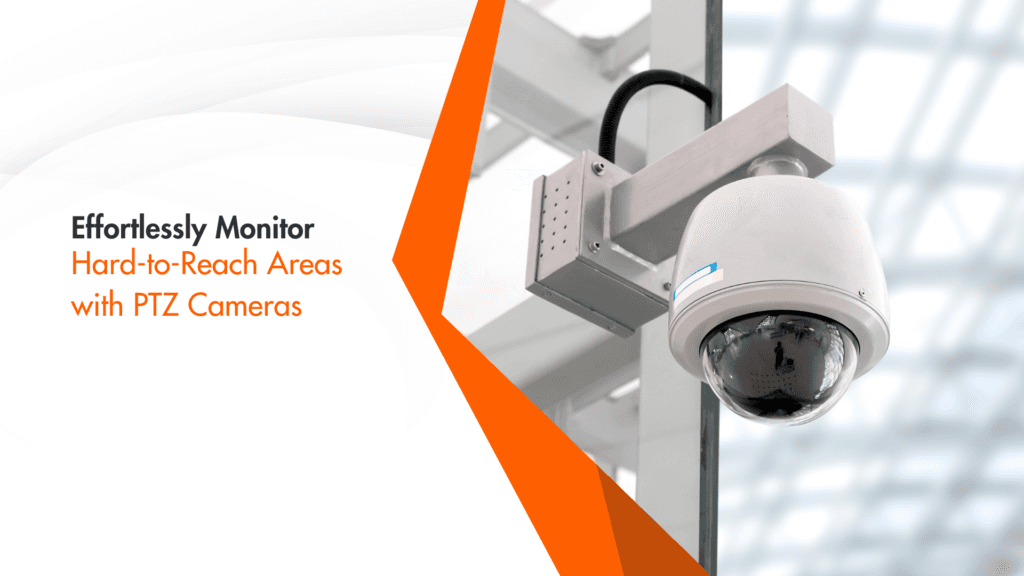
PTZ cameras, or Pan-Tilt-Zoom cameras, are surveillance cameras that give you the ability to control their movement remotely. They have mechanical parts so you can swivel the view left to right, up and down, and zoom in and out of a specific area.
These high-resolution cameras are helpful for businesses with many restricted areas that require surveillance. They can be deployed in guard stations, parking lots, and factories/warehouses.
Learn how PTZ cameras can be a significant addition to your business security.
PTZ Camera Overview
PTZ cameras cover expansive areas and detect motions and events in a flash through the following features:
Panning and tilting - left & right (horizontally), up & down (vertically) for up to 360 degrees
Auto-tracking - autonomously track moving objects within their field of view (FoV)
Panoramic views - open space monitoring made possible using image stitching technology to get panoramic footage of a large area
Close-up views, too - zoom in from extended distances
AI analytics at your disposal - accurately extract object features from footage
Low-light imaging - clear views and rich colours even in extreme lighting conditions
Weather-resistant - secure monitoring in any weather or environment
Live Guard functionality - some PTZ cameras, like the ones provided by Hikvision, have this feature to ward off intruders with sound and light 24/7
ePTZ vs. true PTZ cameras
ePTZ is short for electronic Pan, Tilt, and Zoom. It uses digital zoom technology to simulate true PTZ-like features on a fixed (without moving parts) camera.
How does it work? It’s simple. ePTZ cameras use a high-resolution sensor that focuses only on a portion of the camera image and magnifies this area of interest to fill the entire frame. The software digitally crops and zooms into portions of this image to simulate panning, tilting, and zooming.
In layman’s terms, imagine you have a very high-resolution photo of a room. With ePTZ, you could digitally zoom in on one area of the photo and then pan to the left or right, or tilt up or down, all within that same photo. The camera does something similar with its video feed.
Challenging Surveillance Scenarios
Let’s discuss some scenarios where surveillance can be challenging but PTZ cameras are able to address these surveillance needs.
Large Warehouses and Loading Docks
PTZ cameras help security teams follow the movement of goods and zoom in to verify shipping details or investigate suspicious activity. You can have coverage of multiple loading bays from a single camera position.
These high-resolution cameras let you see your entire warehouse from almost any angle. All your footage is also stored digitally on an NVR/DVR so you can view it at any time from any device.
Regardless of the industry you’re in, your warehouse space contains large amounts of inventory that require diligent security.
Retail Environments
Because PTZ cameras are designed for dynamic monitoring, you can leverage their panning and tilting features to track customer flow patterns, monitor high-value merchandise areas, and have clear footage of checkout areas. Their zoom capability helps observe interactions and incidents at a safe distance.
Usually, a fisheye security camera is enough for indoor retail stores because it provides adequate visibility throughout the store. But if you have larger/outdoor retail spaces, it might be best to invest in a high-speed PTZ camera. The best cameras for outdoor retail businesses can offer 360-degree PTZ views and powerful zoom of up to 36x.
Parking Facilities
Your security staff can also monitor parking areas and follow vehicles or pedestrians of interest through the help of PTZ cameras. They are helpful in instances where you need to read licence plates, thanks to the zooming feature of the PTZ lens.
Parking lot administrators will also be able to know the operating conditions in a lot, in addition to safety-related monitoring. A PTZ bullet lens (like the one offered by Hikvision) helps them understand the status of the parking lot and the distribution of vacant spaces.
Office Building Perimeters
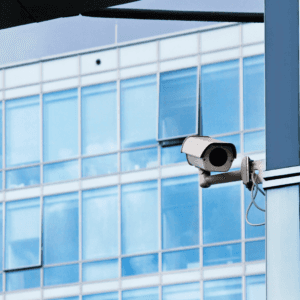
PTZ cameras continuously monitor building exteriors, entrances, and even nearby areas. With their panning capability, you’ll be able to cover wide areas and identify security concerns before they reach your office building.
Even without the presence of an operator, PTZ IP cameras (like those offered by Avigilon) ensure that critical events or unforeseen incidents do not go unnoticed, as they automatically track and record evidentiary details which you can review later during forensic investigations.
Manufacturing/Shop Floors
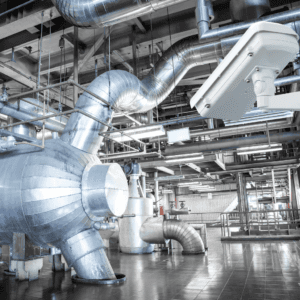
Leverage PTZ cameras to monitor production processes, check if you are complying with worker safety, and identify points where you can apply quality control. You can use the zoom function to do a quick inspection of specific workstations and/or machinery.
These cameras can be mounted from various convenient locations such as the ceilings, I-Beams, and other structures and you’ll have a clear view of everything that is happening on a shop/manufacturing floor.
PTZ Cameras’ Benefits for Challenging Locations
Instead of installing multiple fixed cameras to cover a large or complex area, a single PTZ camera can often do the job more effectively. You will save a significant amount of money on initial hardware costs and ongoing maintenance expenses.
The reduced equipment footprint also means two things. One, fewer potential points of failure. Two, a simpler security system management.
Take a large warehouse setting as an example. Placing PTZ cameras in optimal locations removes the need to mount multiple fixed cameras. You have a more dynamic coverage of aisles, loading areas, and high-rack storage zones using a few PTZ cameras.
Besides these benefits, PTZ cameras also minimise the need for extensive on-site security personnel. A single operator is enough to remotely monitor multiple areas from a central location.
Cost-Effectiveness Over Time
The initial investment might be higher than fixed cameras, but you will see their long-term value over time especially if you have many challenging locations within your perimeter.
PTZ cameras are also adaptable to changing security needs, meaning they remain valuable assets even if facility requirements change or evolve in the future.
Considerations During Implementation
When installing security surveillance cameras in challenging locations, you should have them mounted in their most optimal positions.
They should be:
High enough to avoid tampering,
Away from physical obstructions,
With consideration of the sun’s position,
Where vibration is minimal, and
At positions that minimise blind spots
When you want them installed outdoors or in places with harsh conditions, consider the following protection measures:
Make sure that the cameras you’ve chosen have IP66 or higher ratings for water and dust protection
Install protective housing but ensure that there’s proper ventilation
Use surge protectors to reduce the risk of electrical damage
Consider installing weather shields for additional protection against sunlight and precipitation
Always ensure that all cable connections are sealed and weatherproofed
Successful implementation does not end with CCTV installation. You must be well-informed that your security cameras can be properly integrated with control systems.
What should you do?
Verify compatibility with existing Video Management Systems (VMS)
Configure network settings so that footage can be remotely accessed
Set up proper user access controls and authentication
Test integration with other security systems, such as access control and alarm systems
Establish backup recording and storage systems
More Considerations
Staff training, monitoring protocols, and maintenance schedules are also needed to make the most out of this security investment. Lacking these operational factors makes these cameras inefficient and won’t fully serve their purpose as a surveillance tool.
Training Needs
It’s imperative to train your staff for the following:
Basic operation and control of PTZ functions
Understanding preset positions and patrol patterns
Troubleshooting common issues
Emergency response procedures
System maintenance and basic care
Monitoring Protocols
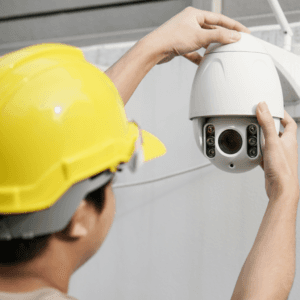
You must also establish clear protocols for:
Regular monitoring schedules and responsibilities
Priority areas in need of heightened surveillance
Response procedures for different kinds of incidents
Documentation and reporting requirements
Handover procedures between shifts
Maintenance Schedules
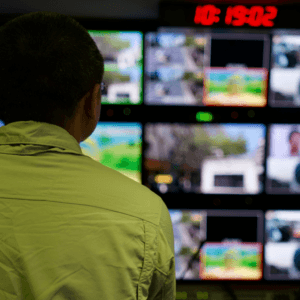
Conduct regular maintenance to ensure that your CCTV system performs at its optimal level.
Periodic cleaning of camera housing and lenses
Testing the movement mechanisms
Firmware updates and system checks
Calibration of preset positions
Conclusion
The demand for effective security through video surveillance security cameras has been increasing, and more areas need to be monitored around the clock. PTZ cameras have been the preferred option because of their flexibility and rich features. If you are new to this camera type, discuss this option with us and weigh if PTZ cameras are the right option for you. Explore this page for our brands of video surveillance systems and cameras.