CCTV & Cameras
Loss prevention is any practice implemented to reduce a business’s losses from fraud, theft, and operational errors. The overall goal is to eliminate preventable losses and preserve profits.
Loss prevention can be done in many ways, one of which is through security systems (e.g., CCTV installation). Retailers will use modern tools like POS systems, anti-theft equipment and inventory-tracking devices, among others, to reduce retail shrink.
Let’s focus on how CCTV systems can help with loss prevention.
Modern CCTV Systems at a Glance
Gone are the days of grainy footage and bulky recording equipment. Modern systems have significantly evolved. They are essentially security guards for stores that never sleep, working 24/7/365.
Retail security cameras are now available in every shape, size, and form. Their shapes determine the coverage, while their size and form enhance deterrence or discourage unwanted activities.
The core components of a modern CCTV system
The usual setup of a modern CCTV is as follows:
High-resolution cameras with features like pan-tilt-zoom capabilities and night vision
Network Video Recorders (NVRs) with storage and retrieval systems
Video Management Software (VMS) that enables intelligent monitoring and analysis
AI-powered analytics tools to identify suspicious behaviours
Mobile integration capabilities for remote access and management
What distinguishes them from security systems in the past is that they can be seamlessly integrated with other security and business operations, such as Electronic Article Surveillance (EAS) gates, Point-of-Sale (POS) systems, and access control mechanisms.
Direct Benefits of CCTV Installation for Loss Prevention
Retail surveillance cameras act as a physical measure to prevent theft and security breaches and as an investigative tool to assist with liability and claims when needed. When people know that they are being watched, they have less tendency to shoplift or commit retail theft (for employees).
Positioning them in the most optimal way sends a clear message to everyone that you take business security seriously. CCTV installation in retail stores provides the following benefits beyond deterring those with malicious intent.
Prevents Internal Shrink
An internal shrink simply refers to any act relating to employee theft, cashier errors, and vendor fraud. This action is committed by individuals within the organisation which is equally damaging as external shrink.
CCTV cameras help prevent this from happening by:
Monitor cash handling at POS terminals
Surveilling stock rooms and delivery areas
Recording void transactions
Observing interactions that might indicate collusion between the employee and a customer
Real-Time Monitoring & Response
Through the various features of modern CCTV, retail security personnel can immediately respond to incidents as they unfold.
Instant mobile alerts
Live video feeds that can be remotely accessed
AI-powered motion detection
Real-time tracking of individuals
Evidence Collection & Investigation
The footage from the CCTV serves as visual evidence during investigations and insurance claims. You can also use the video recording to train your employees on how to address similar circumstances in the future.
And because advanced CCTV systems have facial recognition capabilities, you may be able to catch the offender by matching their appearance, clothing, and actions with existing databases.
Transaction Monitoring & Analysis
With CCTVs integrated with POS systems, retailers are able to unify the transaction data with the footage. It is now possible to monitor employee activity during transactions and analyse whether their actions are suspicious while handling cash or during product scanning.
The Camera Placement
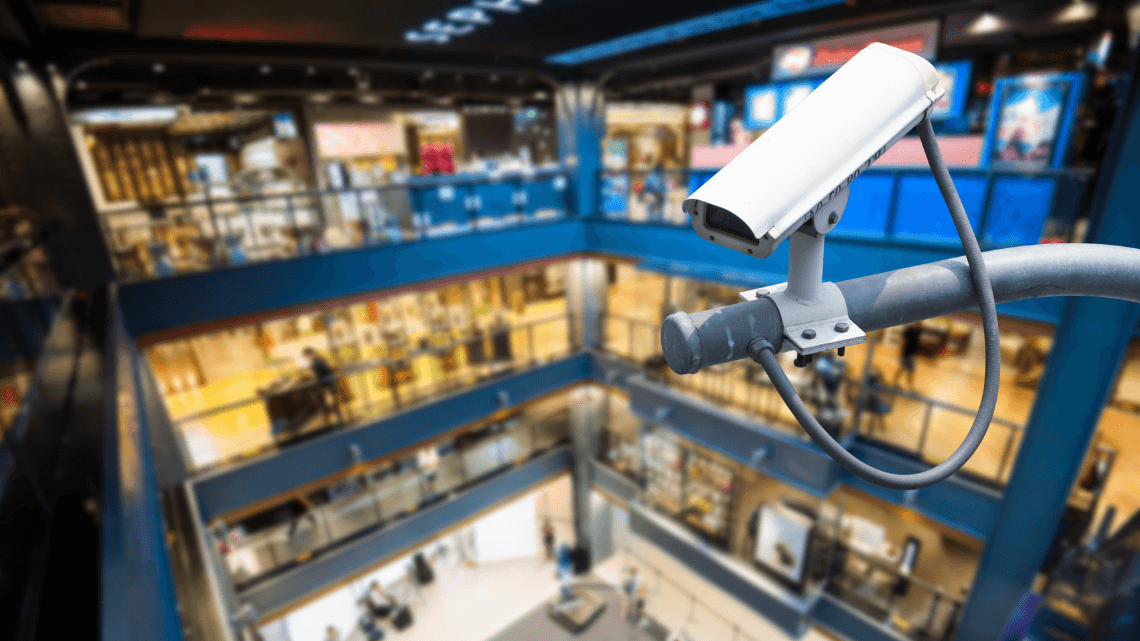
CCTV installations benefit many establishments, not only retail stores. But it’s most effective when they are placed in a way that they capture all movements within the perimeter of your store.
High-Risk Areas
This is the topmost priority that needs 24/7 monitoring—high-risk areas in your establishment(s). Place your security cameras where you think are most vulnerable to theft and suspicious activities.
Examples of these are:
Store entrances and exits (what to monitor: all foot traffic)
Checkout counters (what to observe: transactions and cash handling)
Self-service areas (as this is where shoplifting commonly occurs)
Stockrooms and loading docks (this is where inventory moves in and out)
High-value merchandise displays (these are frequent targets for theft)
Eliminating Blind Spots
Before installing CCTVs, one important consideration is to have no blind spots. Security cameras won’t serve their purpose if there are surveillance gaps, as people who know the ins and outs may use this opportunity for organised crime.
Here is what we recommend that you do.
Put wide-angle lenses on corner-mounted cameras
Overlap your security cameras’ field of view
Placing dome cameras, as needed
Additional CCTV coverage in areas with high shelving or display units
Coverage Optimisation
Different areas in your retail store require different types of camera coverage.
General Store Monitoring | Overview cameras (wide-angle lens cameras, panoramic cameras, fisheye cameras, PTZ cameras) |
Specific High-Risk Areas | Detail cameras (High-resolution cameras, varifocal cameras, cameras with advanced zoom capabilities, good low-light performance, and analytics) |
Dynamic Monitoring of Larger Spaces | PTZ cameras (because of their wide area coverage, zoom capabilities, dynamic tracking, and remote control and accessibility) |
Implementation Best Practices
Follow these best practices for CCTV surveillance camera installation so that you can maximise the effectiveness of your security system.
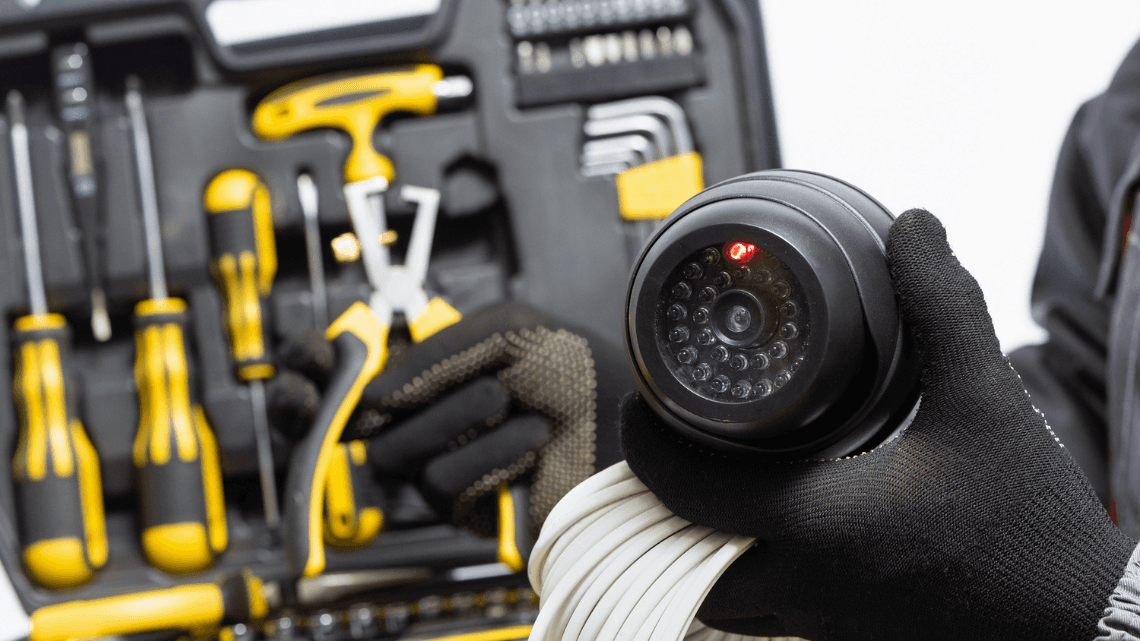
Professional CCTV Installation
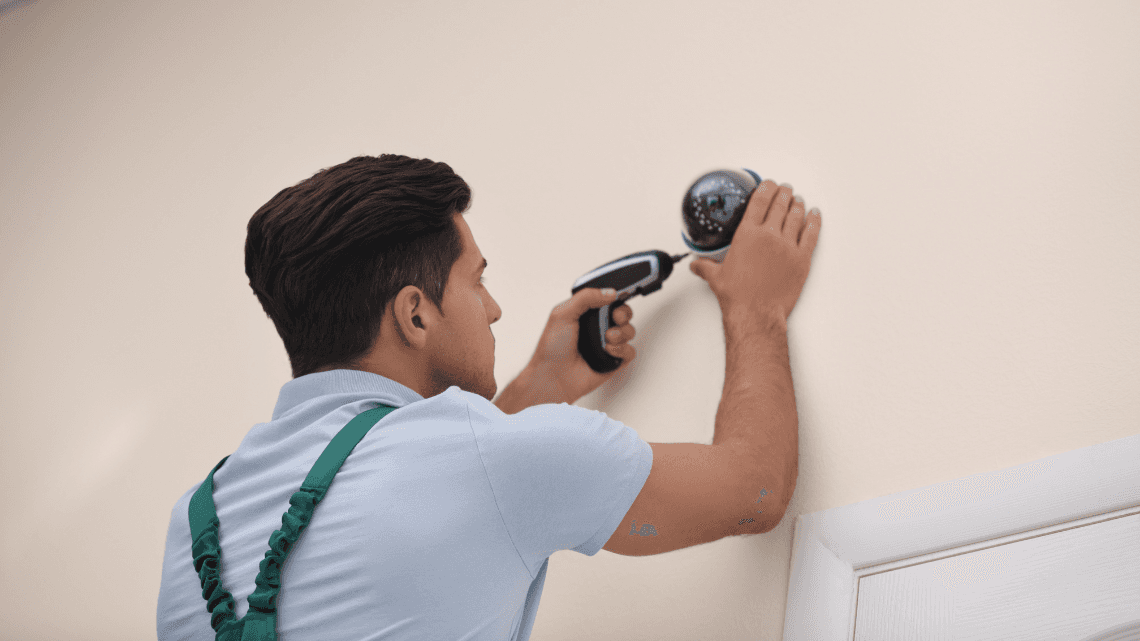
Partnering with professionals for CCTV installation in Singapore is the better option. Do not be tempted by DIY installation because it is seemingly cost-effective.
You get:
Expert assessment of your security needs
Proper cable management and network configuration
Optimal camera positioning based on lighting and angles
Integration with existing security systems
Professional testing and quality assurance
Warranty coverage and ongoing technical support
Training Your Staff
Educating employees is an excellent practice. The key is to involve every stakeholder in maximising security. Train them on system operation and monitoring, make them understand various privacy and security protocols, and immerse them in procedures for incident reporting and response.
Lastly, establish clear guidance on footage access and handling that they can follow.
System Maintenance and Updates
Your CCTV system’s reliability is in direct proportion with regular maintenance. Make it a habit to maintain security by scheduling equipment inspections to check for faulty components (if any), updating the software, cleaning and repositioning cameras, monitoring and optimising performance, and backing up storage systems.
Documentation and Standard Operating Procedures
It is crucial to maintain clear documentation to ensure consistent practices for every personnel and stakeholder. There should be:
Written security policies and procedures
Incident response protocols
Maintenance schedules and records
Staff training materials
System configuration documentation
Emergency contact information
Choosing the Right CCTV Solution
Before you invest in a CCTV system, the first step is to evaluate your requirements. Consider the following factors:
Store size and layout configuration
High-risk areas
Current loss patterns and security vulnerabilities
Peak business hours and traffic flow
Budget constraints and ROI expectations
Integration needs with existing security measures
After carefully considering every item above, then you can decide on the capabilities of the security cameras. A comprehensive security setup must contain the following features.
High-resolution cameras
Real-time monitoring capabilities
Integration with POS systems
Mobile alerts
Night vision capabilities
Motion detection
Easy-to-use playback features
As your business scales, so should your security. So, it’s imperative that you future-proof your business’s security. You should be able to add cameras and increase the storage capacity later on in the future.
Your CCTV system should also be compatible with emerging retail security technologies.
Conclusion
Installing CCTV cameras in your retail stores is an investment in your business’s long-term sustainability and profitability. Its benefit is not only simple surveillance. You get to protect your bottom line because you can stop suspicious activities from happening.
Contact D-Ron today for a professional consultation on the setting up the suitable security CCTV systems for your retail business.