CCTV & Cameras
The need for higher-resolution CCTV surveillance becomes increasingly important, with Singapore’s population density projected to reach 8,699 people per square kilometre by 2025 and 9,088 per square kilometre by 2035. In such a densely populated environment, the ability to focus on specific areas or details within a large scene is crucial, and this is where 4K resolution CCTV camera excels. The superior image quality offered by 4K CCTV not only enhances security and public safety but also aids law enforcement in identifying and tracking potential threats.
4K is rapidly becoming a preferred standard in Singapore’s CCTV landscape, but what exactly distinguishes 4K from other resolutions that make it the new gold standard for CCTV video quality? Read on to find out.
A Closer Look to 4K Resolution in CCTV
4K resolution, also known as Ultra High Definition (UHD), is a significant leap forward in image clarity for CCTV (Closed-Circuit Television) surveillance technology
Imagine a screen or image sensor divided into a grid of tiny squares, each containing a single colour value (pixel). The more pixels there are, the higher the resolution and the sharper the image. 4K refers to the horizontal and vertical pixel count of the display.
Standard HD (High Definition) - 1920 x 1080 pixels (around 2 million pixels)
4K Resolution - 3840 x 2160 pixels (around 8.3 million pixels)
This translates to four times the number of pixels in a standard HD image, resulting in a noticeably crisper and more detailed picture.

Resolution Comparisons
Standard Definition (SD)
Approximately 720 x 480 pixels (NSTC) or 720 x 576 (PAL)
The most basic resolution
Low-image quality with significant blurring and lack of detail
Rarely used in modern surveillance systems unless working with legacy equipment
High Definition (HD)
1280 x 720 pixels (720p)
A significant improvement over SD
Offers decent image quality for basic surveillance
Still prevalent in older systems or where cost is a major factor
Full HD
1920 x 1080 pixels (1080p)
The standard for many years
Still provides good clarity for most surveillance needs
Excellent balance of quality and storage/bandwidth requirements
4K (Ultra HD)
3840 x 2160 pixels
The highest resolution currently common in consumer-grade surveillance
Offers unmatched detail, ability to zoom and crop, and greater effectiveness with analytics
Larger storage and higher bandwidth demands
Beyond 4K: 8K and Higher
8K - 7680 x 4320 pixels; offers even higher resolution, but currently less common and very expensive for CCTV applications
Other Higher Resolutions - Various resolutions exist in specialised applications, but less relevant to typical surveillance scenarios

Advantages of 4K CCTV over 1080p and Lower Resolutions
Unmatched Detail
4K security cameras have a resolution of around 8 megapixels, compared to about 2 megapixels for 1080p. This provides four times the number of pixels, resulting in a significantly sharper and more detailed image. You can zoom in digitally on 4K footage while maintaining much more clarity compared to 1080p, which quickly becomes pixelated when zoomed in. This gives you an immense advantage in investigations or incident identification.
Wide Coverage with Detail
4K resolution CCTV cameras capture a wider field of view without sacrificing image detail. It means that a single 4K camera might replace multiple 1080p cameras, thereby reducing costs and setup complexity.
Some practical examples are license plate identification and evidence in investigations. Firstly, a lower-resolution camera may struggle to clearly capture a license plate from a distance. A 4K security camera can both cover the entire lot and provide enough detail to read license plates when zooming in on footage. And when an incident occurs, the ability to zoom in, see fine details, and maintain image clarity when examining footage can be the difference between inconclusive evidence and identifying a suspect or crucial object.
Cost-Effective
4K CCTV security cameras offer significantly higher resolution than 1080p or lower resolution options, but it is important to understand that they don’t automatically translate to being the most cost-effective.
4K footage requires significantly larger storage space, so you may need to invest heavily in storage infrastructure.
Transmitting 4K footage requires larger bandwidth, which can increase costs for internet/network usage at your surveillance points.
4K CCTV systems may require more advanced network infrastructure and management, increasing setup and maintenance costs.
Generally, 4K cameras themselves are more expensive than their 1080p counterparts.
Where 4K Might Make Sense for Cost-Effectiveness
If you need ultra-high detail in specific areas like cash registers and entrances, investing in 4K cameras for those while using lower resolution for general surveillance could be more cost-effective. Secondly, as storage and bandwidth costs decrease over time, a 4K system can become more cost-effective in the long run due to the future-proofing it provides.
In some cases, the superior coverage area of a single 4K security camera can enable you to use fewer total cameras overall, potentially offsetting higher initial camera costs. And in situations where high-definition identification is critical like investigating financial fraud, the cost savings gained by quicker resolution of incidents might outweigh some of the increased costs of 4K.
Enhanced Digital Zoom
In essence, digital zoom works by cropping a portion of the original image and then enlarging it. This results in a closer view but a reduction in overall image quality.
The 4K Advantage
4K cameras capture footage four times the amount of pixels compared to HD. The significantly higher pixel count is the key to better digital zoom.
When zooming in digitally on a 4K image, you’re essentially starting with a much larger and more detailed ‘canvas’. Even when cropping and enlarging a section of the frame, there’s more initial information to preserve a usable image quality, compared to starting with a smaller 1080p image.
This becomes crucial in surveillance scenarios where you need to zoom in on distant objects or people. License plates, facial features, and specific actions become much clearer with 4K’s enhanced digital zoom.
Interoperability
4K resolution is increasingly becoming the standard for video systems. Modern video management software (VMS), monitors, and infrastructure are often designed with 4K compatibility in mind. This can make integration a smoother process.
Also, many 4K security cameras support ONVIF (Open Network Video Interface Forum) protocols. ONVIF provides a standardised way for different brands of IP cameras and video systems to communicate, simplifying integration even in mixed-brand environments.
Future-Proofing
4K CCTV cameras may have a higher upfront cost, but they provide superior image quality, increased longevity, and flexibility—all these make them an excellent future-proof investment for security solutions where image detail and long-term adaptability are critical.
Improved Forensic Capabilities
4K resolution boasts four times the number of pixels as 1080p. This translates to incredibly sharp images with far greater detail, even when digitally zooming into a specific region of interest. In forensic investigations, the ability to zoom in and clearly see facial features, license plates, clothing details, and small objects is crucial for identifying suspects and gathering evidence. 4K outperforms lower resolutions significantly in these cases.
All the other advantages discussed, such as enhanced digital zoom and a wider field of view with detail, significantly improve the forensic capabilities of an area.
Advanced Features
Enhanced Night Vision
Many 4K cameras are equipped with larger image sensors and advanced image processing technology. This translates to vastly improved low-light sensitivity, capturing clearer, more detailed images in nighttime conditions or dimly lit environments.
Select 4K cameras offer ‘full-colour night vision’ even in extremely low-light conditions. This provides colour information instead of traditional black-and-white night vision images, which can be crucial for identifying clothes, vehicle details, and other visual clues.
Lastly, 4K systems produce footage with less image noise (grainy artefacts) in low-light situations compared to 1080p systems.
Wide Dynamic Range (WDR)
WDR technology enables cameras to capture clear images in scenes with vastly differing levels of brightness and darkness. For example, a doorway with bright sunlight outside and a dimly lit interior can be captured with detail visible in both areas simultaneously.
Without WDR, details in shadows or brightly lit areas might be lost. In security and forensic scenarios, WDR ensures that important information isn’t obscured by challenging lighting conditions. WDR is also especially valuable in the tropical climate of Singapore, where harsh sunlight and sudden downpours create challenging lighting scenarios for CCTV cameras.
4K and Video Analytics: A Powerful Combination
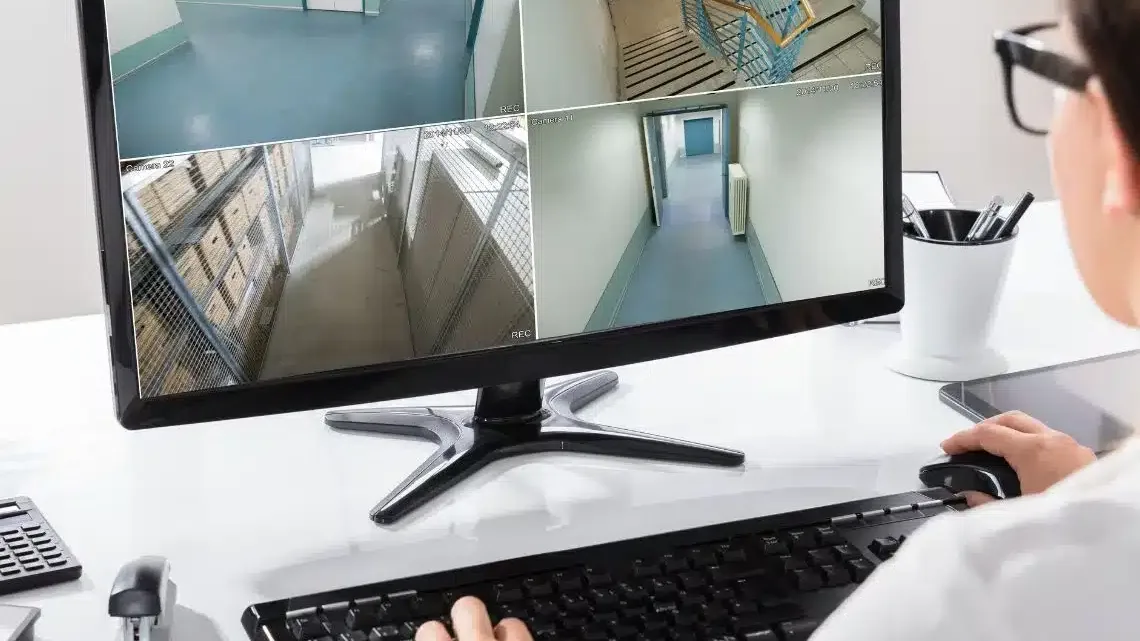
4K resolution is the foundation of detail, while video analytics turns footage into insight.
Businesses can be instantly notified about suspicious behaviour, intrusions, line crossing, or left-behind objects.
Software can distinguish between people, vehicles, and animals, helping in more targeted responses.
Understand traffic flow, hot spots, and dwell times to optimise store layouts or public spaces.
Quickly search hours of footage to find specific incidents based on object type, colour, direction, etc., saving investigation time.
Considerations for Implementing 4K CCTV Systems
There are quite a number of factors you should consider before fully embracing 4K CCTV systems.
Cost - 4K systems tend to be more expensive than lower resolution counterparts in terms of cameras, storage, and infrastructure.
Storage - 4K footage generates significantly larger file sizes. Plan for robust storage solutions like high-capacity hard drives, network-attached storage (NAS), or cloud-based storage.
Bandwidth - Streaming and storing 4K video places a higher demand on your network bandwidth. You may need to upgrade your network infrastructure to have a smooth data flow.
Compatibility - Ensure compatibility between your 4K cameras, recorders (NVRs/DVRs), viewing monitors, and any existing CCTV systems you have.
Lighting - Good lighting conditions are important so you can maximise the benefits of 4K resolution. Assess your lighting and upgrade if needed.
Data Regulations - Be mindful of Singapore’s Personal Data Protection Act (PDPA) guidelines regarding data collection, storage, and usage.
How D-Ron Helps Clients Navigate 4K System Design and Setup
At D-Ron, we begin by assessing your needs, budget, and existing infrastructure. We then work closely to understand your specific goals for implementing a 4K CCTV system, whether they’re for enhancing overall security, improving facial recognition capabilities, or covering a larger area with fewer cameras. Based on this assessment, we offer guidance on security surveillance camera selection, storage, networking requirements, and appropriate software. Our team provides comprehensive design documents, technical support during setup, and recommendations for reliable installers. We make sure that you are guided throughout the entire setup process.
Our experts work hand in hand with you to implement the new system, guaranteeing seamless integration with your current infrastructure. We, at D-Ron, also provide training to help you and your staff master the new system’s features and functionality. Our main goal is to empower all our clients to implement effective security camera systems in Singapore.
Ready to fortify your security? Connect with D-Ron today to start safeguarding your space with confidence.